Top 10 Things You Should Know About Madden NFL 26 Gameplay
Hello Madden fans! Football season is right around the corner, and the anticipation for Madden NFL 26 Gameplay is building. We’re kicking it off with a deep dive into all the new gameplay features and improvements you can expect in Madden NFL 26.
10. Football Weather:
“THAT’S Football Weather!” is one of the many quotes from the great John Madden himself. He exuded pride in the historic and unique link between extreme weather conditions and NFL football. Madden NFL 26 Gameplay is delivering a set of features under this name – Football Weather – that combines the visceral nature of the weather look and the significant impact it has on gameplay.
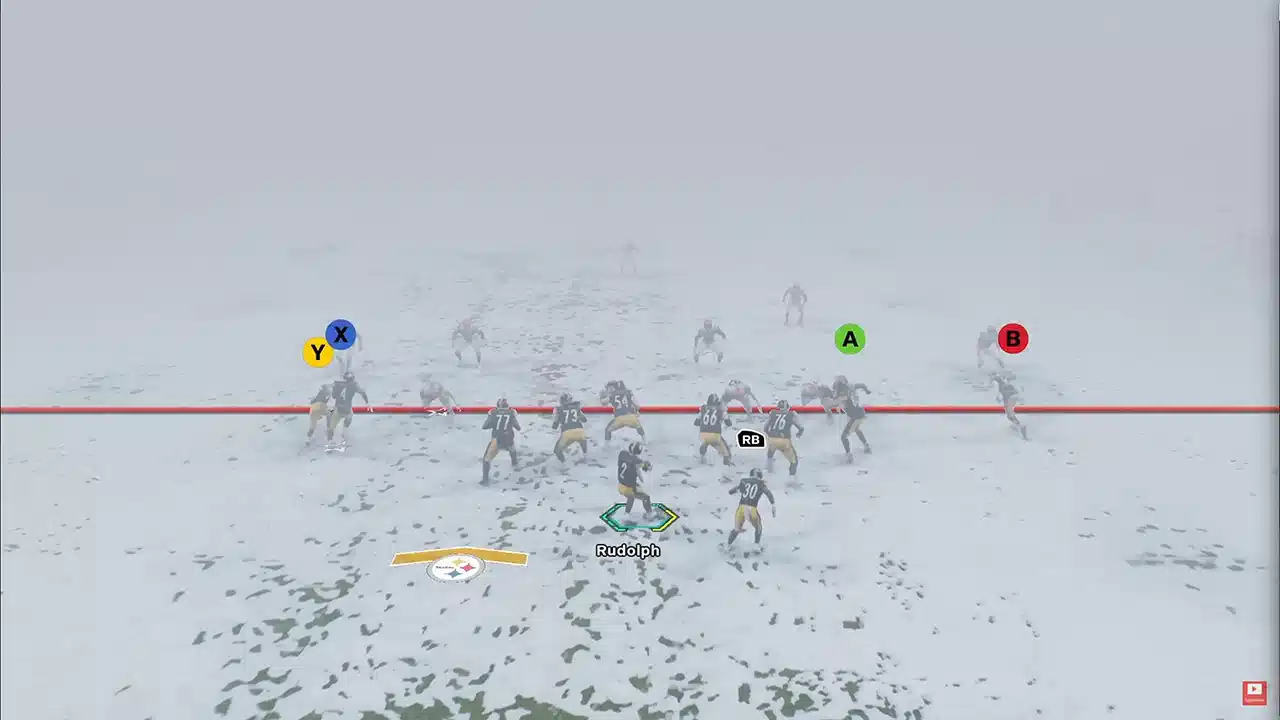
This experience is being brought right to your front door with an overhaul to weather visuals and intensity, coinciding with gameplay impacts to increase the realism of having to gameplan for the elements. Changes have been made to all previously supported weather types, and heavy snow with fog and heavy rain with fog have been added for Madden 26, all of which will be felt on the field as much as seen in Madden NFL 26 Gameplay.
When playing in the elements, you will have to adjust your gameplan based on how extreme they are. In heavy fog, you’ll be battling visibility in the passing game, just like an NFL QB. Players can slip when making drastic cuts, WRs can lose their footing when releasing off the line, and linemen on both sides of the ball can lose their footing during their get-off. This is all dependent on a player’s Change of Direction (COD) rating and how much precipitation is in play.
The way players run will feel different due to penalties to their Speed (SPD), Acceleration (ACC), and Change of Direction (COD) ratings, as most athletes are not as explosive or smooth when running in heavy snow or rain. It will also be harder to kick and throw, with penalties to power and accuracy. You’ll see more broken tackles, tackles that slide on the wet field, dropped passes, and fumbles, all driven by player ratings and their team’s home climate.
The gameplay weather system is so detailed that players from cold-weather teams will not be as impacted when playing in the snow. Teams like Buffalo, Chicago, Green Bay, Cleveland, and Philadelphia, which play in the snow frequently, will perform better than teams from warm weather climates. Teams such as Miami, San Francisco, Los Angeles, and Jacksonville will experience heavier movement penalties. To simulate the balance of the NFL, cold weather teams also will experience faster rates of fatigue when playing in the heat.
All of this is driven by improvements to the simulation side of weather. Precipitation is variable, wind has a wider range, and all of this affects the in-game visuals as well as the impact on each player’s performance. All Football Weather is not created equal, and each game will present a different challenge to overcome, truly enhancing the Madden NFL 26 Gameplay experience.
9. Signature Identity: Coach DNA and QB DNA:
The goal for Madden NFL 26 Gameplay is to make each Sunday feel different, and each game feel rewarding. Each time you play a game, whether against the AI or another user, online or offline, you should feel immersed in a rewarding challenge – a strategic chess match – an overall NFL experience where the unique identities of the teams, coaches, and players have a meaningful impact on how the game is played. Madden NFL 26 is delivering this ‘signature’ experience through Quarterback DNA, Coach DNA, and Football Weather.
QB DNA:
The NFL Quarterback is the most iconic position in all of sports. As the developers push forward with signature styles in Madden, they saw an opportunity to completely re-imagine the performance of the position. This includes visual quality, signature behaviors, improved AI, and new mechanics. Significant enhancements are being delivered across each component that makes up a QB’s DNA so that they play, look, and feel iconic Madden NFL 26 Gameplay.
In-Pocket Behaviors:
The first component of QB DNA is the behavior inside the pocket. You’ll notice new signature ball holds. There will be nine unique ball holds at launch, including two-hand and one-hand variations of high and low holds, or ‘by chin’ and ‘back’ ball holds. For one-hand variations, the QB AI is dynamic enough to contextually switch to two-hand holds when under pressure or in traffic to increase ball security. A big benefit of having unique ball holds is that they align better with each QB’s throwing motion, putting less stress on blending animations.
Scramble/On The Run:
There’s a significant amount of improvements coming for the scramble game, both for passing and running. All on-the-run passing animations have been completely revamped, and there’s now full animation coverage from every arm angle. Footwork fundamentals have also been improved to ensure the QB’s hips and shoulders get into the appropriate position relative to where the QB is trying to throw the ball when moving.
To give players more control and responsiveness, animation transitions have been smoothed out, starting with the first transition from the in-pocket idle to scramble locomotion and then from scramble loco to ‘set feet.’ This means as soon as you provide an input, you’ll see and feel the appropriate football work and movement.
Coach DNA:
Another way unique signature identities of the NFL are being brought to life is through Coach DNA. This is a set of features that delivers on the real-life tendencies and styles of each NFL head coach. Running the same set of plays against similar CPU schemes to get easy wins is a thing of the past. To be successful, you’ll now need to gameplay and strategize differently depending on your opponent. This truly elevates the strategy in Madden NFL 26 Gameplay.
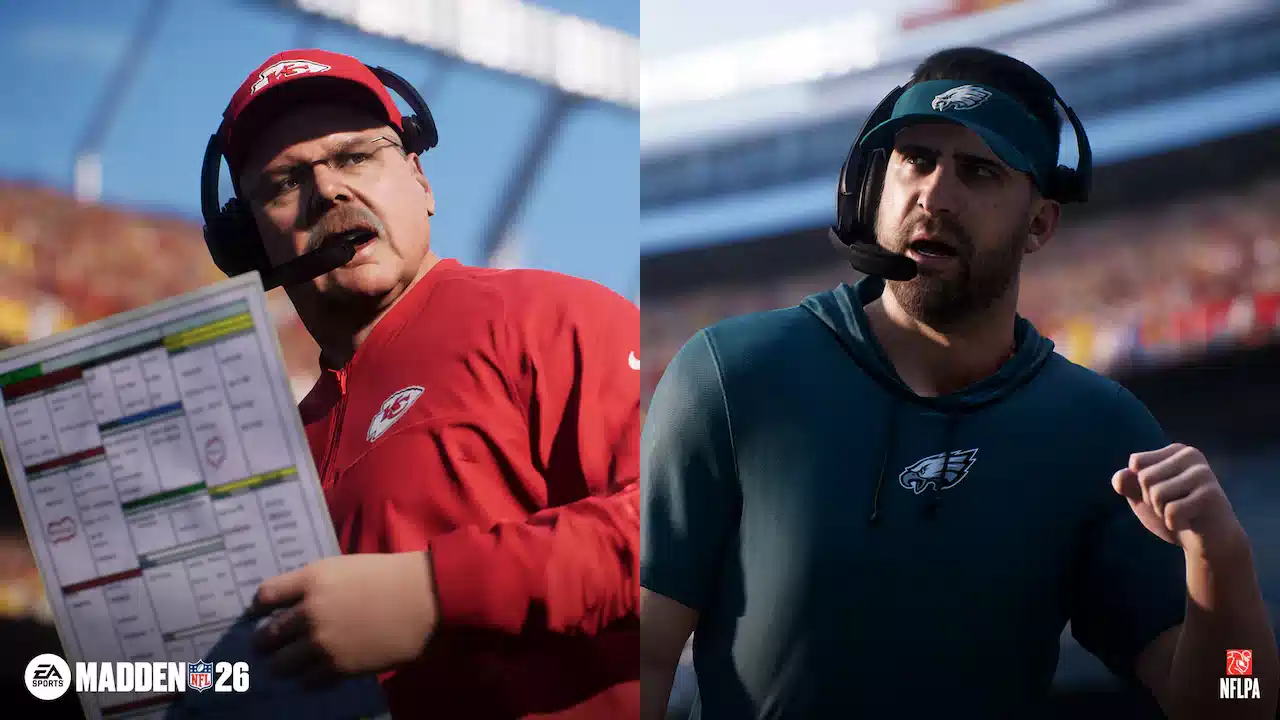
Data-Driven Coaching is an example of how Madden 26 is truly being built straight from Sundays. Decades of NFL playcall tendency data are used to train a predictive machine learning model. This new innovation allows you, the gamer, to ask: What would Andy Reid do? What would Dan Campbell do? The way the model answers those questions makes each game feel like the chess match of the NFL that we all love to watch unfold every week.
Coach Speak:
Data-Driven Coaching will introduce a first-of-its-kind feature to sports games known as Coach Speak. It’s a coach lens that brings top playcall recommendations to life by explaining why they’re being suggested, and doing so in the unique style of the coach you’re playing as. This feature gives you a backstage pass to the thought process of the NFL’s masterminds.
When the Lions’ model recommends going for it on 4th and short, you’ll see a banner featuring Dan Campbell alongside a text insight providing context into the decision. It’s driven by a new language-learning AI model. You’ll see signature mentions about grit, grind, and maybe even a mention of biting kneecaps. It will feel like you’re the offensive coordinator on the sideline while the head coach offers direction.
Realtime Coaching AI:
Real-Time Coaching AI (RTC) significantly advances Madden 26’s schematic depth by providing players with an authentic NFL strategic experience that dynamically evolves throughout each game. Originally introduced in College Football 25 and praised by players, RTC now transitions into Madden 26 as the central adaptive AI system across all of American Football.
Building on top of the College enhancements for 26 (delayed shifts, improved formation intelligence, targeted run recognition, and more), defenses can now disguise their intentions through delayed Safety rotations, pre-play defensive front adjustments, and precisely timed blitz packages. This evolution forces players to carefully read and react post-snap.
8. Adaptive Counters:
We’re just going to be
For example, if you’re playing against a mobile QB, the model will start suggesting more QB Contain or zone coverage plays to combat the running QB. These counters will be shown in the Coach Suggestions menu with specific tags on them that read ‘Counter.’ This is a fantastic addition to strategic Madden NFL 26 Gameplay.
For anywhere in the game that allows mix-and-match between the coach and playbook, or coach customization, a ‘League Model’ has been created that has been trained on global NFL playcall trends. This ensures that in any game played outside of team-specific context, playcalling will still reflect authentic leaguewide tendencies. Both the individual team and league models will be updated throughout the NFL season via Title Updates to stay current with evolving coaching trends.
7. Pass Block Mechanics:
The only people who care more about pass protection than a Quarterback are Madden players, and for that reason, there’s a litany of improvements coming to increase the authenticity and control of protecting the QB in Madden NFL 26 Gameplay.
First, unique pass protections have been added to each passing play in the playbook data. Each pass block scheme is available in the pre-play adjustment menu. Half slide left/right, full slide left/right, empty, and base are now applied appropriately to passing plays and are on by default, which you can see by looking at the coach cam play art. Protections are set to fit the original design of the play, so be aware of them when you make hot routes.
To make it easier to interact with the new pre-set protections, some new tools have been added. The first is a new pre-play mechanic called ‘unTarget Defender.’ Similar to the ID the Mike mechanic, this allows you to tell your line to IGNORE a player rather than target him. This is a useful mechanic against someone who likes to hover the LB over a Guard or Center and then drop into coverage in Madden NFL 26 Gameplay.
Next, Protection on the Fly functionality allows you to easily switch the direction of your protection with a flick of the RS. Use the new Untarget mechanic with a RS flick up, without having to bring up the adjustment menu. This new functionality will allow you to be quicker in making blocking adjustments at the line.
In addition to new tools, a visual upgrade to the dropback passing game has been made with all-new pass block locomotion. This year, a complete new set of exclusive locomotion that only pass blockers use has been captured, making offensive linemen look more realistic and athletic in their pass sets as they build the pocket around the launch point.
Dropback protection is only half the battle in today’s NFL. Playaction pass is a big part of the passing game for every team. Blocking in the play action game has also been improved. With the new block targeting system introduced in Madden 25, every core run scheme in the game uses scheme-specific rules to modify targeting. This year, that same run block targeting has been extended to play action pass, along with new logic and animations.
To dive even deeper into the trenches, there are some pass rush updates, too. First, the stamina thresholds that controlled how many moves could be performed per play have been removed. Instead, each move will cost a dynamic amount of stamina based on the defender’s pass rush move ratings. The functionality of the R2/RT input has also been changed so that holding down for the acceleration burst gives you speed and different sheds and counters that are more explosive, like faster wins, but carry risk of burning through stamina quicker. Lastly, the amount of pass protection strength relative to the blocker resistance bars has been reduced to allow for more balance in the battle of the trenches. This is a crucial update for Madden NFL 26 Gameplay.
6. Stunts and Twists:
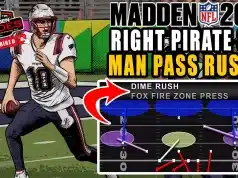
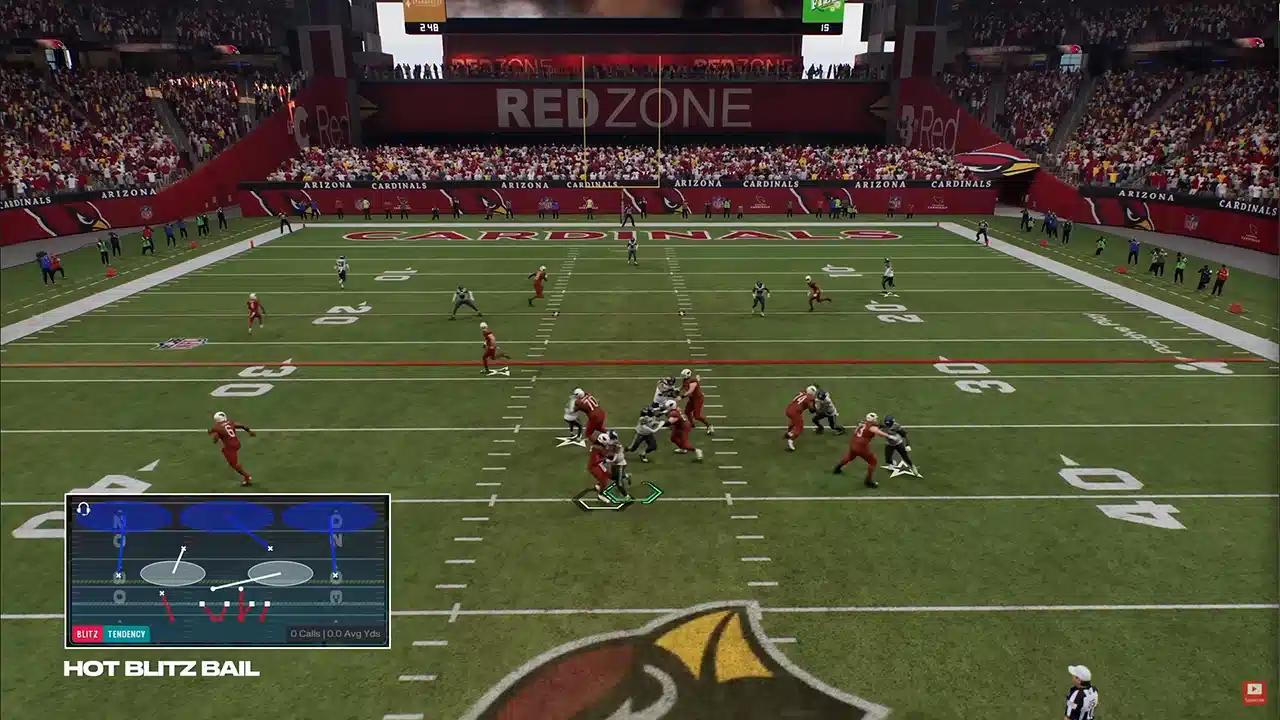
On the defensive side of the ball, players have been clamoring for stunts and twists for years, and they’re finally able to deliver them in Madden NFL 26 Gameplay. It’s time to bring even more strategy and play customization to playbooks. You’ll be able to add any stunt to any defensive play as long as the formation alignment supports it by holding down on the playcall menu.
When you enter the dropdown menu in a standard four-down look on defense, you may have as many as 12 different stunts to choose from to apply to any play in that set. If you’re in a sub defense and have only three or two down linemen, you may have only a few or in some cases no stunts to choose from. The system is completely dynamic in that it allows the appropriate stunts in the appropriate fronts.
To combat today’s pass-heavy NFL offenses, there’s also been a rise in exotic blitz pressures. The Vikings are a prime example. Defensive Coordinators have gotten more creative in finding ways to pressure the QB and can bring pressure from all over the field. Recreating this, a variety of new blitzes such as Simulated Pressures have been added that can overload one side without rushing more than four players. This results in more looping, crossing, and overall ways to get blitzers free off the edge. For players who relish making their opponent’s offense sweat, you’ll have more tools in your belt than ever in Madden NFL 26 Gameplay.
5. Custom Zones:
Last year, custom route stems were introduced, which players enjoyed for the creativity it allowed on offense. This year, the direct defensive counter of Custom Zones is in play. Custom Zones allow you to tell your zone defense exactly where you want them to cover. The control scheme is similar to custom stems – bring up the hot route menu for an individual defender in pre-play, hold down LB/L1 and move your zone coverage up or down. You’ll even see the playart update in real time.
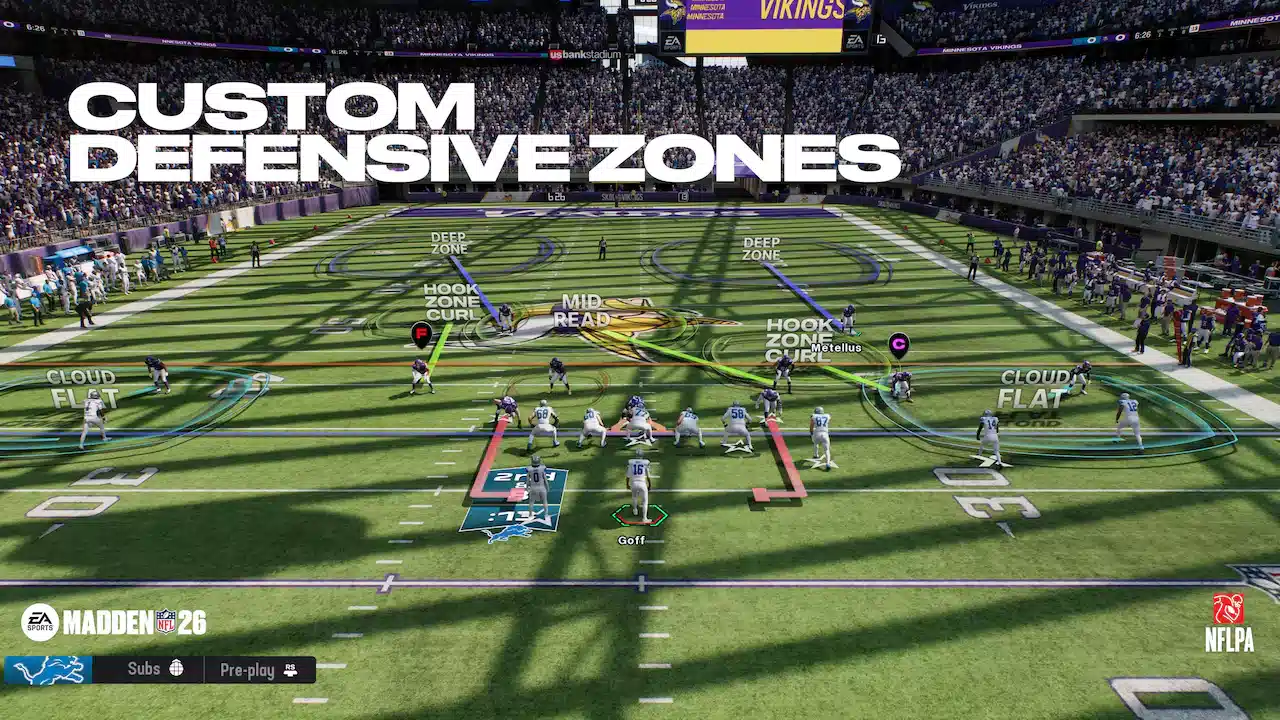
When you have dialed it in to your liking, simply release LB/L1 to lock it in. If you have a zone drop activated via Coach Adjustments, the Custom Zone commands will override the Coach Adjustment when in conflict. This offers an incredible layer of strategic depth to Madden NFL 26 Gameplay.
4. Passing Game Overhaul:
Nothing is more fundamental to the QB position than passing, and for Madden NFL 26 Gameplay, they’ve completely refreshed in-pocket throws, back-foot and back-step passes, lob pass animations, and signature throw styles. Some new types of signature passes, called Signature Off-Platform Throws, have even been added. These are unique, situational passes that can only be triggered by specific players – jump passes on the run by Caleb Williams; no-look passes by Mahomes and Matt Stafford; explosive crossbody throws by Josh Allen and Lamar Jackson. These special passes will automatically trigger for these specific players in similar situations that match what they did in real life.
Madden 26 has all new animations for almost every type of throw, improving the visual quality and responsiveness of the passing game, and paying off the signature styles of superstar QBs. The developers didn’t stop there. They’re also introducing three unique base arm slots – Over-Top, 3/4 High, and 3/4 Low – assigned to each QB based on their default throw angle in real life. QBs who frequently change their arm slot, like Matt Stafford, will be able to dynamically change from one arm-slot to another to get the pass through an open lane in Madden NFL 26 Gameplay.
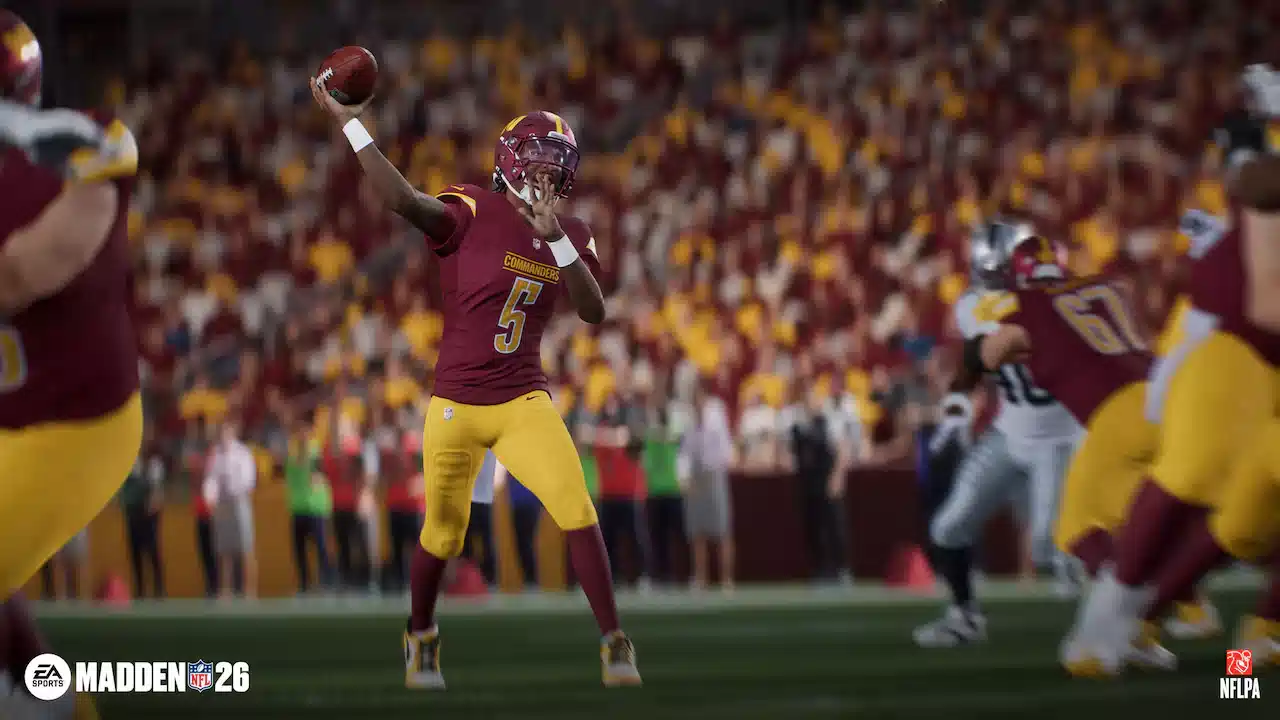
Re-imagining the quality bar of the QB means going into every detail of the position, even refining how the ball comes out of the hand on each throw. It spins out smoothly, leaving the pointer finger last, and comes out with the correct trajectory, spin, and power based on the selected throw. This ensures throws look and feel buttery smooth every time, whether you’re dropping a dime in real-time or going into a slow-mo replay.
Across each component of QB DNA – In-Pocket, On the Run, and Passing – over 500 new animations have been added, and there are 40 unique QB recipes. This means that whether you’re playing against a CPU-controlled QB or using one yourself, each one will look, behave, and feel like their real-world counterpart. This level of detail truly elevates the Madden NFL 26 Gameplay experience.
3. Playbooks:
The final component of Coach DNA is also one of the most important for players: playbooks. Players clearly loved what was brought to the table in Madden NFL 25, with more team-specific plays, a wider variety of new concepts, and frequent updates after launch.
For Madden NFL 26 Gameplay, they’re doubling down, literally. There will be nearly 1000 new plays for launch, which is twice the amount of new plays introduced in Madden 25.
The focus for playbooks in Madden 26 is on the following:
- Motions and Shifts
- Stunts and Twists
- Exotic Defensive Pressure
- New Coach Adjustments
Motions and Shifts:
As seen in the NFL recently, the use of motions and shifts is on the rise. More teams are using ‘eye dressing’ to make similar concepts look different to the defense. More plays with auto-motion are coming to playbooks, along with new double-motion plays and auto shifts. New locomotion sets have been captured so player movement while in motion looks more natural and athletic. For proper balance, motion-follow logic for defenders covering motions has been improved, and defense can now continue making adjustments and hot routes after a motion has started, which is brand new this year. This will definitely impact Madden NFL 26 Gameplay strategy.
Coach Adjustments:
Another addtion in Madden NFL 26 Gameplay is addition to playbook trends, Coach Adjustments will revolutionize your level of control and customization of alignments and assignments. A new coach adjustment allows you to adjust the alignment of your Safeties on defense. Safeties can play Deep (25 yards off the line), Prevent (32), Tight (5), or Close (8) in addition to the default alignment. You can also adjust their width to Spread, Wide, and Pinch, or adjust the midpoint.
Is your opponent trying to RPO you into the ground? Not so fast. New adjustments will allow you to dictate how your AI defenders play against Reads and Peek RPOs. You can decide when you want them to play the run first or the pass first. With these new options, usability has been improved. When using Zone Drops, you’ll now see the playart update, and you’ll have the ability to reset your adjustments to ‘default’ by simply clicking LS/L3.
To add more balance and strategy around fumbles, the ability for a user to have a ‘Conservative’ ball carrier adjustment has been removed. This adjustment will now only be activated by AI-controlled ball carriers (player lock situations). In Madden 26, to try to avoid fumbling in late-game situations, rely on the ‘Coverball’ mechanic by pressing RB/R1. This is a significant change to how fumbles are handled in Madden NFL 26 Gameplay.
2. Pass Coverage:
There are very few core gameplay features our community cares about more than pass coverage. Coming off the considerable conversation about zones in Madden NFL 25, the team has made coverage more realistic to what we see in the NFL for Madden NFL 26 Gameplay. These efforts even included hiring a Super Bowl-winning former NFL defensive backs coach to their design team.
His expertise, combined with the expectations of core players, resulted in a variety of improvements on the backend of the defense. Two main areas of emphasis were Cover 4 and Man coverages.
Cover 4:
- New 4 Strong Trips & Bunch Logic: For route concepts that send a back out of the backfield to a trips side, a new ‘Push’ check has been added to Quarters and Palms coverages. This dynamic adjustment ‘pushes’ or bumps the coverage over to the Trips side and forces a man match on the receivers as they get into their routes. This makes defenders more intelligent about which receivers to leverage.
- Updated ‘China’ call: The ‘China’ call concept in quarters, palms, and three-match coverages has been revamped against combos where the #1 WR runs a short route and the #2 WR goes deep. Improvements to DB techniques allow the CB to quickly leverage the deeper route and the flat defender to handle the short route.
Deep Half:
The AI of deep half defenders has been improved so they reach their landmark quicker and with more urgency as they gain depth. Players should feel more confident using Cover 2 coverages, which aligns closely with the current NFL trend of non-traditional Tampa 2 coverages. This is a subtle but impactful change for Madden NFL 26 Gameplay.
Man Coverage:
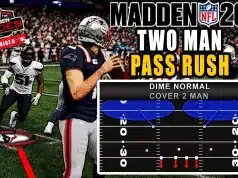
The first improvement to man coverage is a new defender cut reaction system. Based on the ratings matchup of players and leverage, this system allows receivers to create separation more authentically and with better variety. When a receiver wins on their cut, the defender can lose balance, creating a window for a big play. However, lockdown man corners won’t be so charitable.
Leverage Matters More: The leverage of the defender will play a much more significant role in receiver openness than in the past. The base win chance formula is still the Man Coverage (MCV) rating vs. Route Running (SRR, MRR, DRR) rating. However, the leverage side of the defender will significantly impact the outcome at the cut, as well as the amount of separation the receiver can gain. This means a step of separation when winning against outside leverage, versus 2-3 steps when cutting in the opposite direction.
To reduce the frequency of ‘psychic INTs,’ the logic for when an AI-controlled defender can attempt a catch has been refined. If a defender isn’t facing the ball or hasn’t turned their head to see it, they won’t be able to attempt a catch at all and will instead play the receiver for a catch knockout more often. You’ll also see far more variety with new swat animations.
Additional Improvements:
- Increased touch height for swats to give defenders more balanced reactions to high-ball throws and deep RAC catches. That’s good enough I’m going to do anymore
- Improved midair interaction logic for defenders so interactions look and feel more realistic and situation-specific.
- Zone drop and Custom Zone flat zone defenders will now sprint instead of back-pedal to their desired depth when set to 20 yards or more.
- Cover 3 Sky, Cloud, and Hard flat plays now play ‘country cover 3’, meaning underneath defenders will play zone spot-drop zones regardless of the offensive formation.
1. Defensive AI Improvements:
In Madden NFL 26, the emphasis on defensive AI in all facets of the game is significant, even beyond the already discussed pass coverage. The developers believe players will always find offense, so they’re starting the Madden season with a much more aggressive defense. This is a game-changer for defensive-minded players.
To improve run fits, a comprehensive analysis of the data driving gap responsibilities for each play has been done, making them more consistent across the board. This means less guessing where your defenders are going to fit, which you can clearly see in the coach cam playart. Furthermore, you’ll see run fit defenders far more aggressive getting downhill. When good defenses fit the run, they build a wall at the line of scrimmage and beat blockers to the point of attack. That’s exactly what has been done to improve LB and Safety behavior in the run game; you will see them aggressively get downhill instead of waiting too long to get blocked.
The majority of the gap assignments have been designed to be sound against RPOs. A and B-gap defenders will also be more aggressive in playing the run first. The C, D, and E-gap coverage defenders will look to play the pass first if their first key runs a route, but will play the run if they read a block. Keep in mind, as mentioned with Realtime Coaching AI, the game now uses playcalling and adjustments just like a user would to defend repetitive plays! This level of detail in Madden NFL 26 Gameplay is truly impressive.
That was a ton, we know. Can you tell we’re passionate about this? Thank you for making it this far, we can’t wait for you to pick up the sticks soon!
Madden NFL 26 Gameplay is a commitment to the soul of football. The developers simultaneously went back to the basics and innovated authenticity. As you probably noticed, many of the changes outlined are community-driven. They’re direct reflections of the feedback you’ve given, so please, keep it coming, because together, we are football. Madden NFL 26 is Built from Sundays, but most of all, it’s built on your feedback, fandom, and passion.
Enjoyed this deep dive into Madden NFL 26 Gameplay? Share it with your friends!