College Football 26: All 12 Defensive Line Stunts EXPLAINED
A Robert Mays-Style Film Breakdown
Introduction:
`
In the intricate chess match that is football, defensive stunts are the tactical maneuvers designed to disrupt offensive blocking schemes and generate pressure on the QB. This breakdown delves into all twelve distinct defensive stunts available in College Football 26, offering a deep dive into their mechanics, strategic intent, and optimal application. While the game’s AI doesn’t always execute these exactly as drawn, understanding the underlying principles allows players to anticipate and exploit defensive vulnerabilities. Furthermore, these principles are often mirrored in Madden NFL 26, providing cross-game insights. We will dissect each stunt, examining the roles of the Left End (LE), Right End (RE), Weak Side Defensive Tackle (WSDT), and Strong Side Defensive Tackle (SSDT), and how their coordinated movements aim to create free rushers and collapse the pocket.
Stunt Breakdowns:
Left End Exit Two Man:
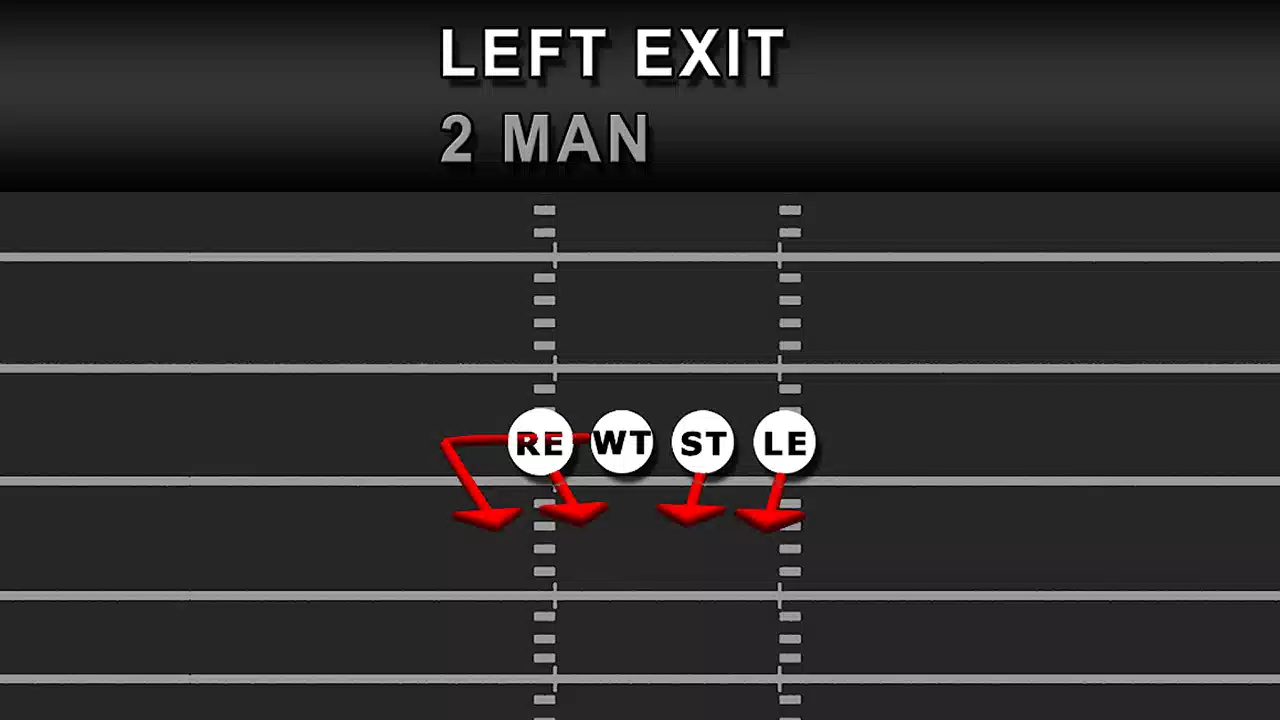
The Left End Exit Two Man is a foundational stunt designed to create interior pressure by confusing offensive linemen. In this particular stunt, the RE initiates an inside rush, aiming to occupy the guard or center. Subsequently, the WSDT) loops around the RE to the outside, then angles upfield towards the QB. This creates a natural pick, forcing the offensive line to make difficult, quick decisions. Meanwhile, the SSDT maintains a straight-up rush, and the LE takes an inside angle, ensuring multiple threats. This coordinated movement in the Left End Exit Two Man aims to open a clear path for the looping WSDT.
Left Pirate Three Man:
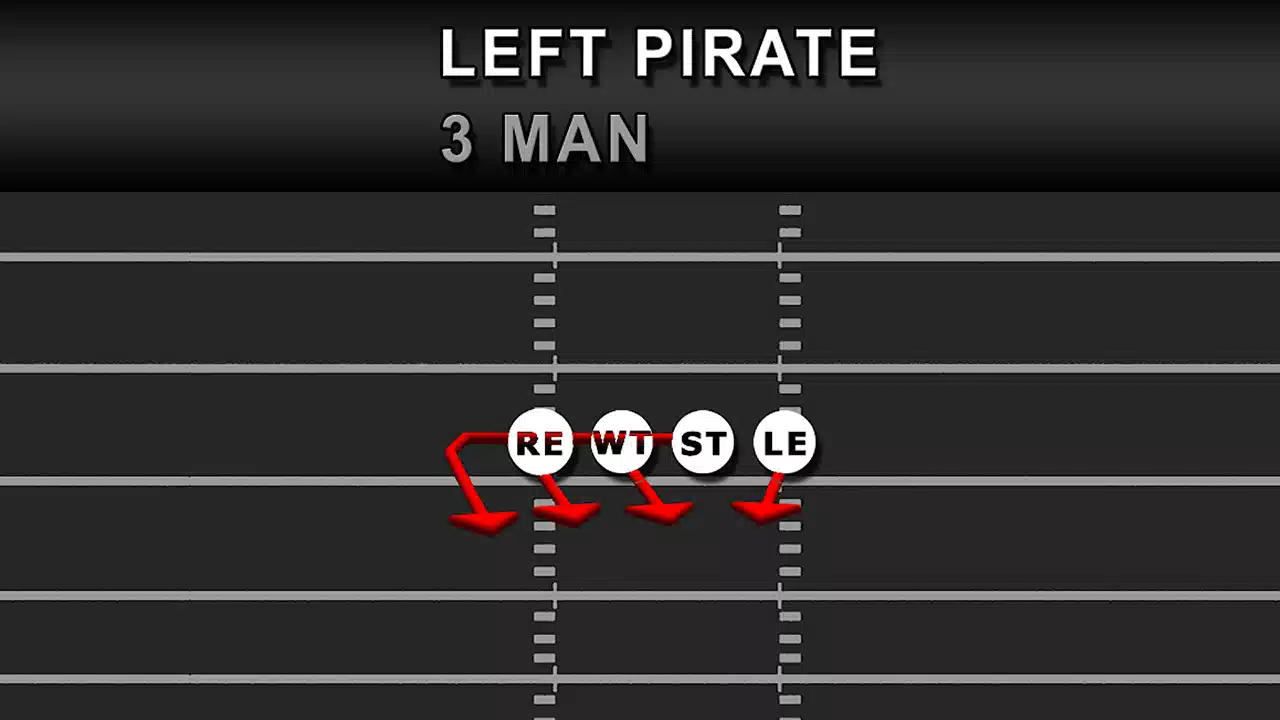
The Left Pirate Three Man is a more aggressive interior pressure package. Here, both the RE and the WSDT crash hard to the inside, effectively creating a wall. The key to this Left Pirate Three Man is the SSDT, who executes a delayed loop around both the RE and WSDT, attacking the A or B gap directly towards the QB. The LE slants inside, further compressing the pocket. This stunt relies on the initial inside rushes to draw attention, thus freeing the SSDT for a clean shot at the QB.
Left Tempe Four Man:
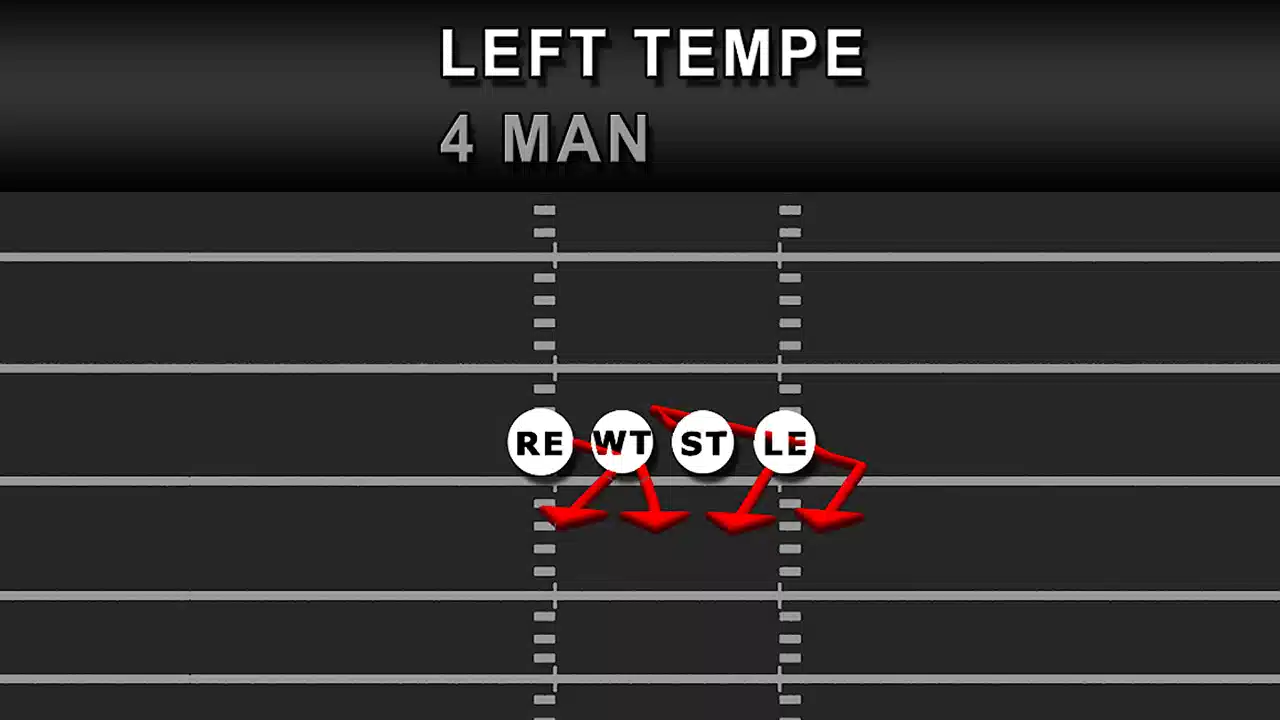
The Left Tempe Four Man is a complex four-man pressure that involves multiple intertwined movements. The SSDT initially feigns an inside rush before breaking sharply to the outside and looping around the LE. Simultaneously, the LE slants to the inside, creating the necessary space for the SSDT‘s loop. On the other side, the WSDT slants to the outside, while the RE loops around him to the inside. This intricate dance of slants and loops in the Left Tempe Four Man aims to overwhelm the offensive line with multiple converging rush lanes.
Left Tex Two Man:
The Left Tex Two Man focuses on creating a quick interior rush. Here, the WSDT takes the initial inside rush, drawing the attention of the interior offensive linemen. Immediately following, the RE loops around the WSDT, aiming to burst through the A-gap directly towards the QB. This is a swift, decisive stunt. The SSDT executes a straight pass rush, and the LE angles inside, ensuring the offensive line remains occupied. The success of the Left Tex Two Man hinges on the speed and precision of the RE‘s loop.
Left Tom Two Man:
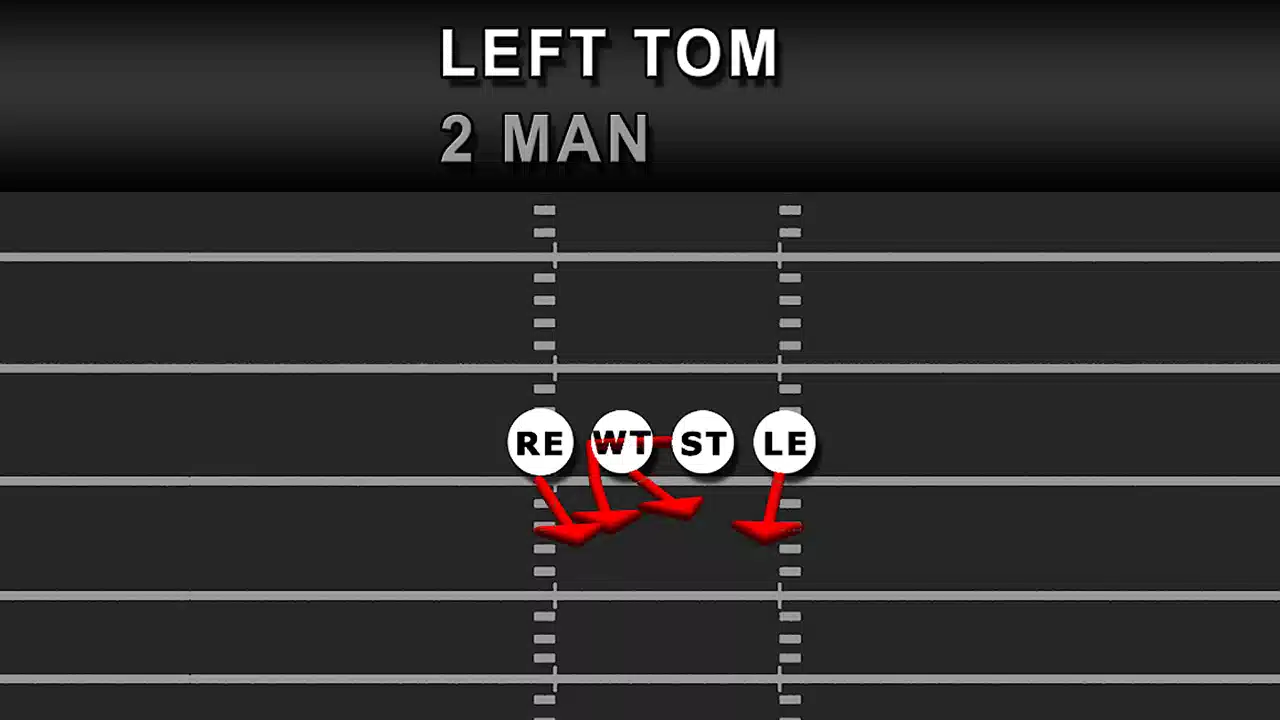
The Left Tom Two Man is another interior pressure concept, but with a slightly different emphasis. The WSDT initiates the inside rush, similar to the Left Tex Two Man. However, in this case, the SSDT then loops around the WSDT, attacking the B-gap to get to the QB. Both defensive ends (LE and RE) slant slightly inwards, aiming to contain the pocket and prevent the QB from stepping up. This particular Left Tom Two Man aims to create a clear lane through the B-gap, often catching guards off guard.
Right Exit Two Man:
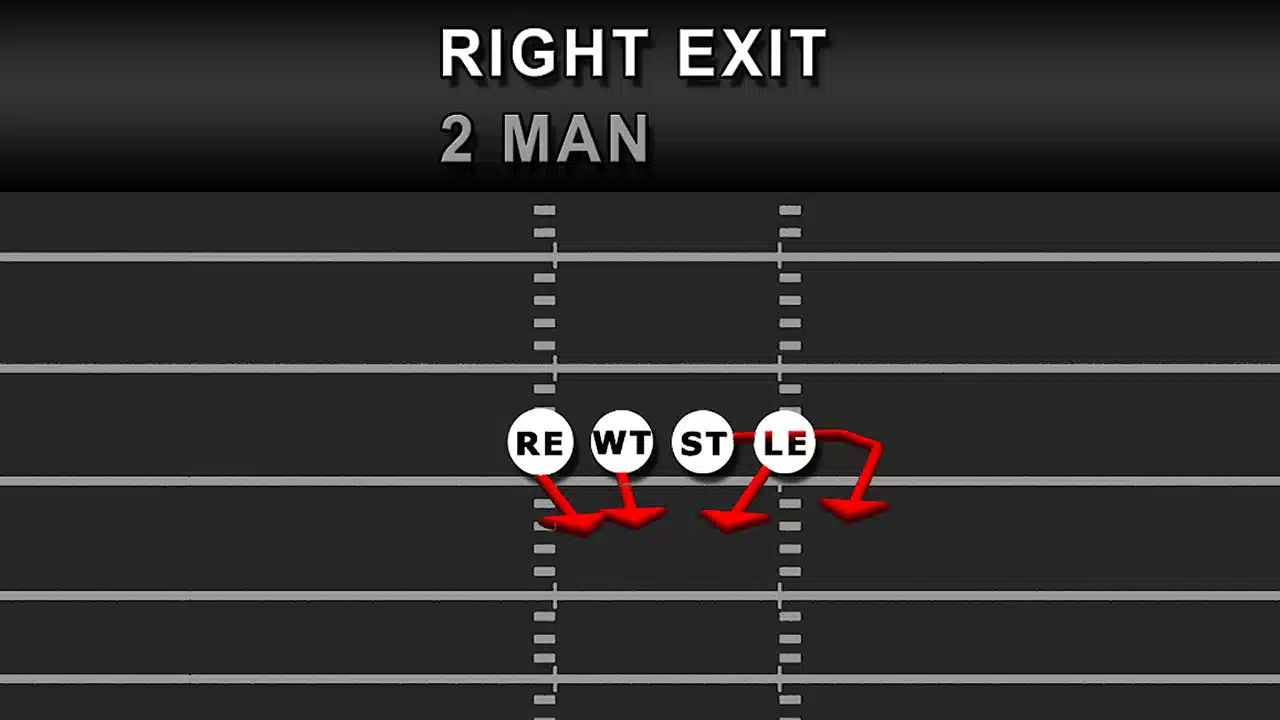
Mirroring its left-side counterpart, the Right Exit Two Man is designed to create outside pressure from the right side. The LE initiates an inward rush, aiming to draw the attention of the offensive tackle or guard. The SSDT then loops around the LE to the outside, before turning upfield to pursue the QB. The WSDT and RE both rush at an inward angle, maintaining interior pressure and containment. This Right Exit Two Man is effective at creating confusion on the right side of the offensive line.
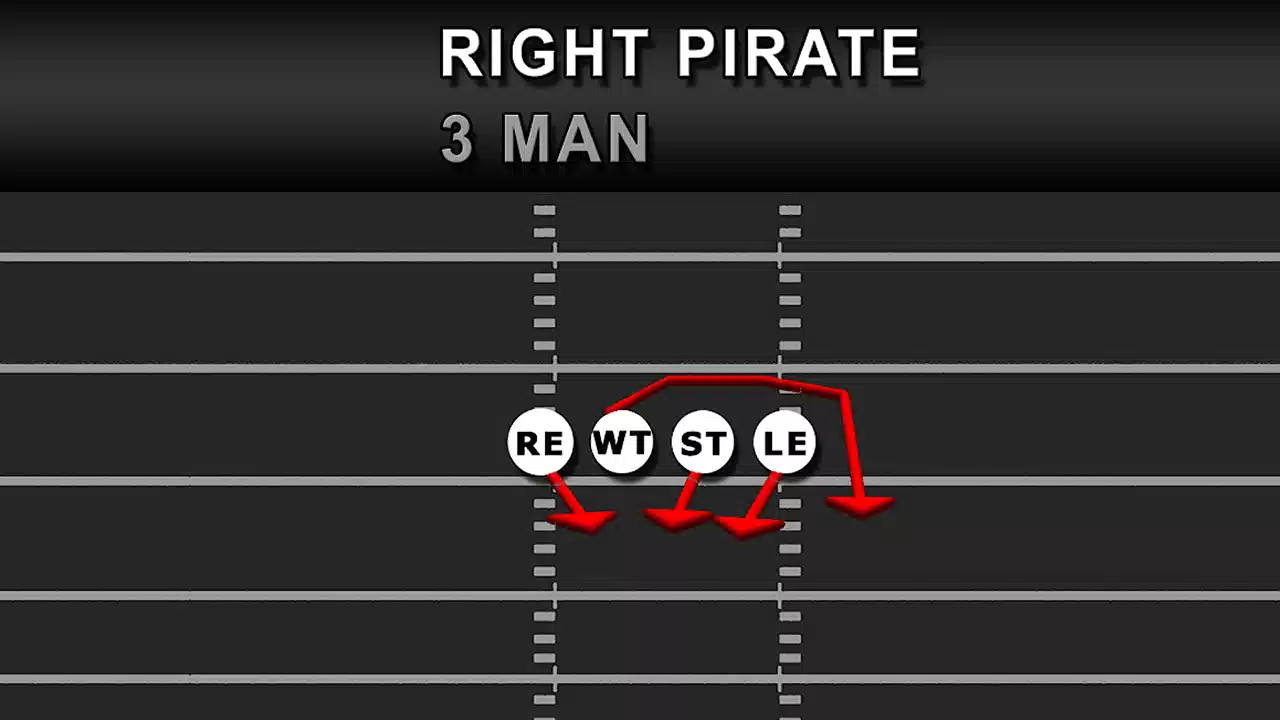
Right Pirate Three Man:
The Right Pirate Three Man is a powerful interior blitz from the right side. Both the SSDT and the LE slant aggressively to the inside, collapsing the pocket from the center. Crucially, the WSDT, instead of looping left and then back, immediately goes to the right, looping around the initial inside rushers to attack the QB. The RE executes a pass rush while slanting to the inside, further constricting the offensive line. This Right Pirate Three Man is excellent for generating immediate interior pressure.
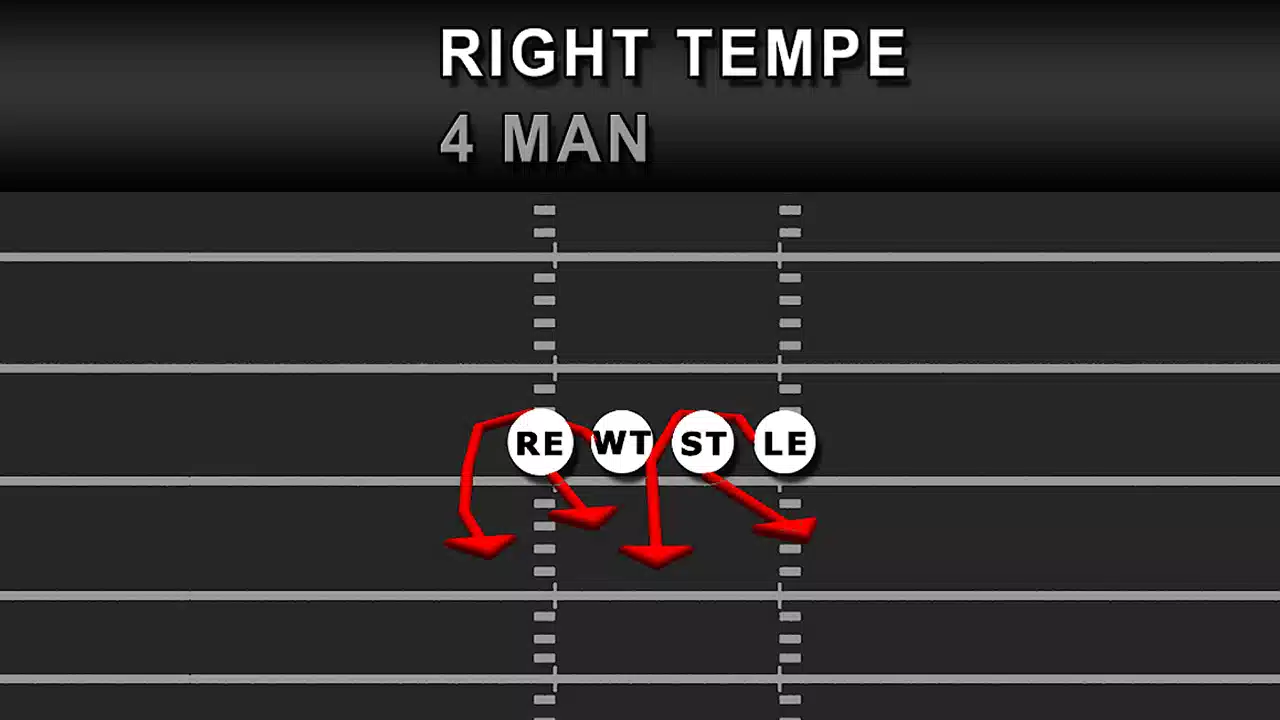
Right Tempe Four Man:
The Right Tempe Four Man is a complex, multi-layered stunt designed to create multiple rush lanes. The SSDT slants towards the outside, drawing the attention of the offensive guard. The LE then loops around the SSDT, heading up the A-gap towards the QB. On the opposite side, the RE slants to the inside, and the WSDT loops around the RE before heading towards the QB. This intricate choreography of the Right Tempe Four Man aims to create a chaotic scene for the offensive line.
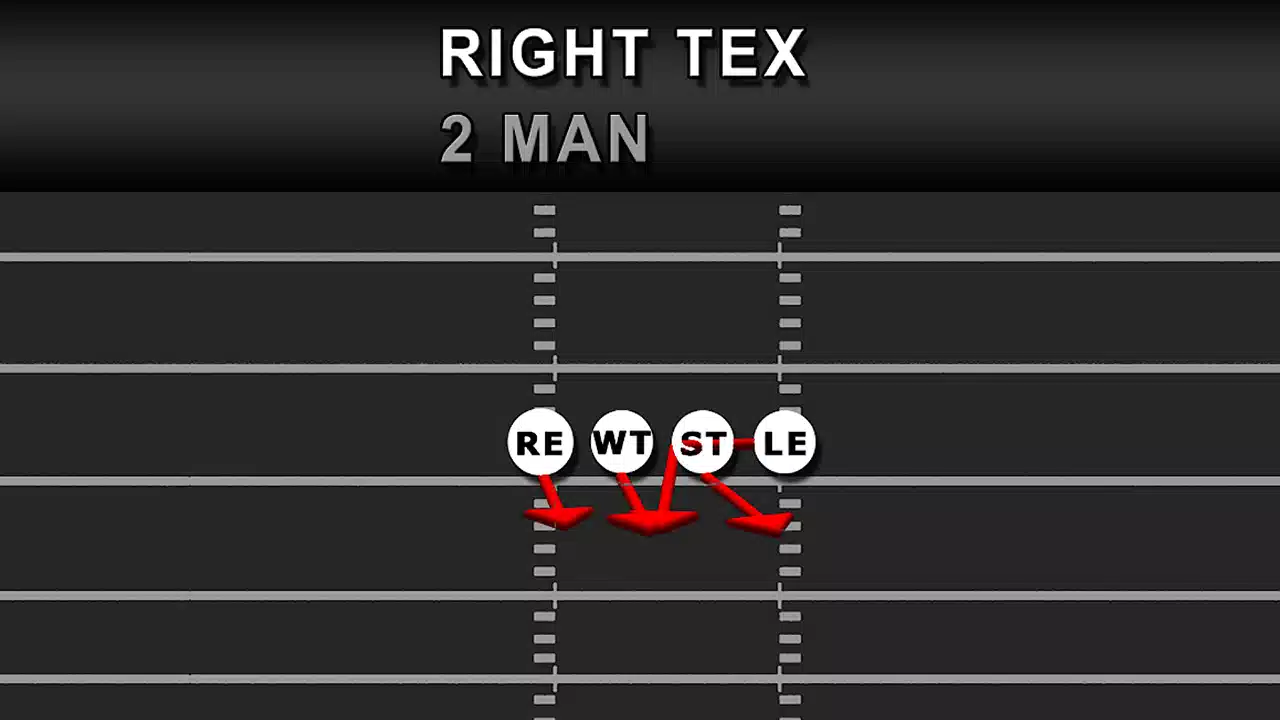
Right Tex Two Man:
The Right Tex Two Man focuses on creating a quick interior rush. Here, the SSDT slants to the outside, drawing the initial block. The LE then loops around the SSDT to the inside, aiming for a quick path to the QB. Both the RE and the WSDT slant inwards, maintaining pocket integrity and preventing the QB from escaping. This specific Right Tex Two Man is designed for speed and direct pressure.
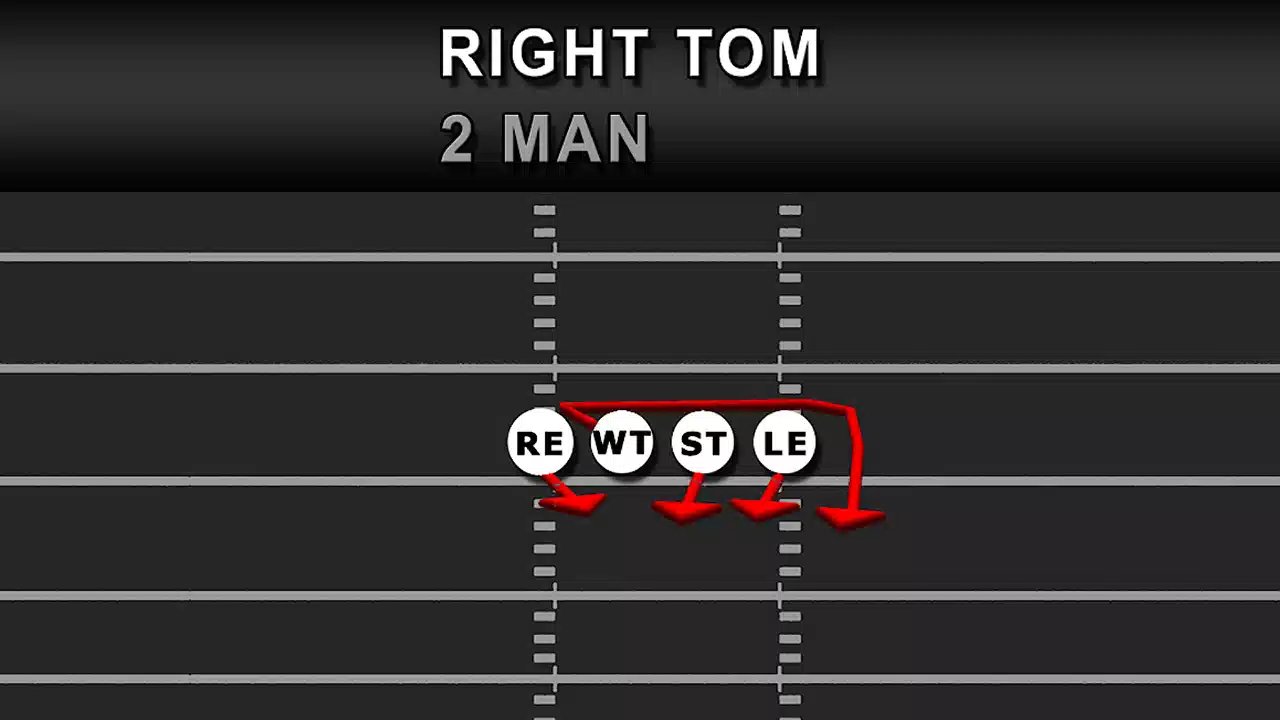
Right Tom Two Man:
The Right Tom Two Man is an interior pressure stunt that relies on misdirection. The SSDT and LE both slant to the inside, initially collapsing the pocket. The WSDT then fakes an outside rush to the left, drawing the attention of the offensive tackle, before cutting back sharply and looping around the LE to attack the QB. The RE slants to the inside, further containing the pocket. This nuanced Right Tom Two Man aims to create a delayed, unexpected rush lane.
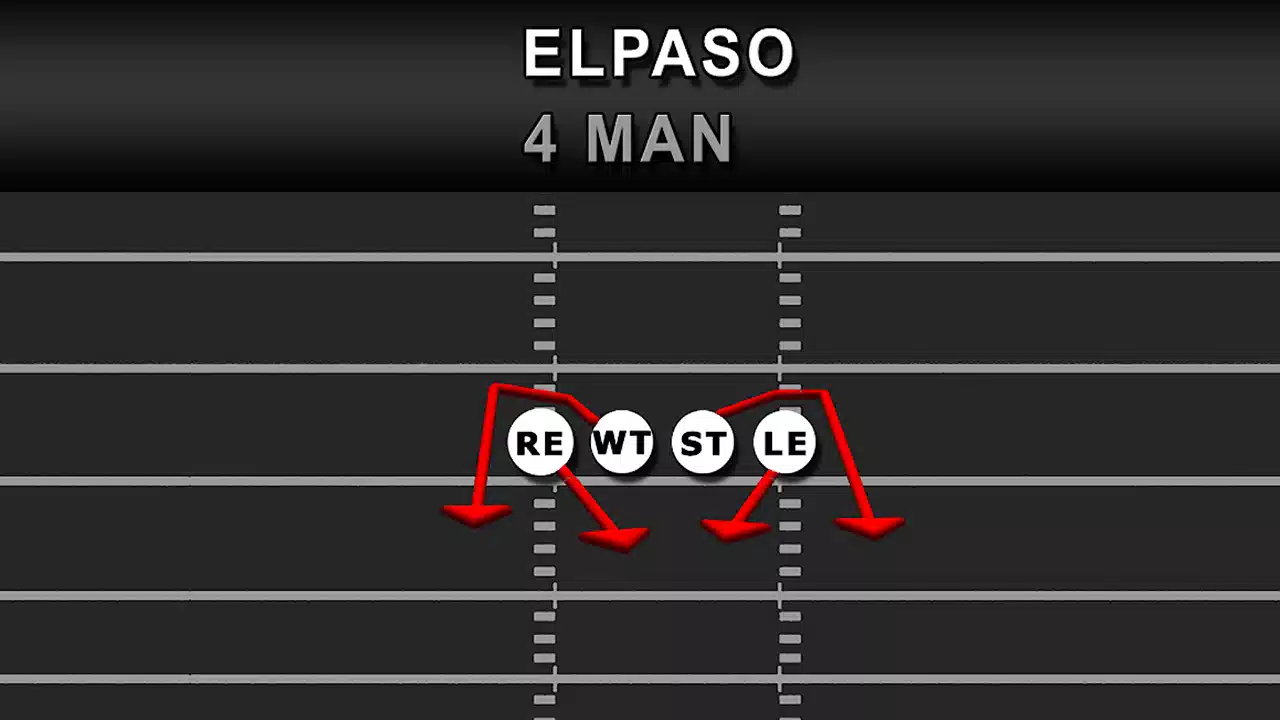
El Paso Four Man:
The El Paso Four Man is a powerful four-man rush that aims to create outside pressure. Both defensive ends (LE and RE) slant aggressively to the inside, drawing the attention of the offensive tackles. Simultaneously, both defensive tackles (WSDT and SSDT) loop around their respective defensive ends to the outside, attacking the edge of the pocket. This coordinated outside rush in the El Paso Four Man is designed to flush the QB out of the pocket or force a quick throw.
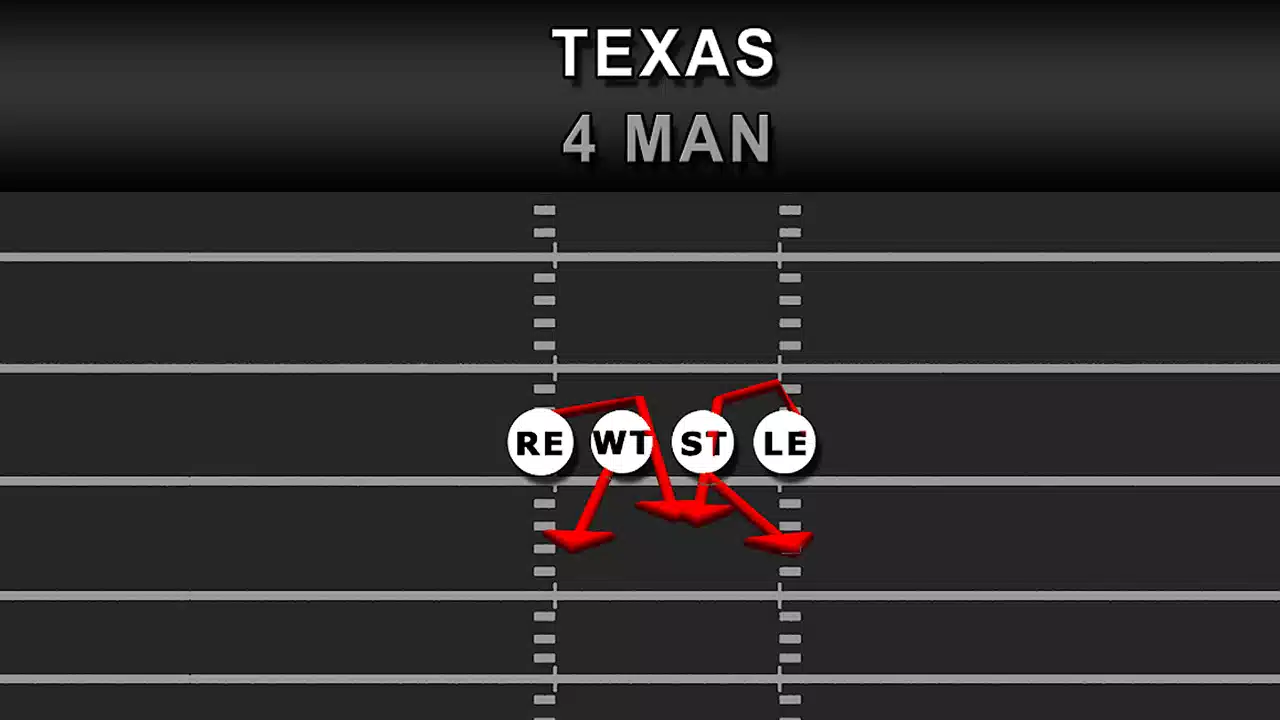
Texas Four Man:
The Texas Four Man is a robust four-man interior pressure package. Both defensive tackles (WSDT and SSDT) slant aggressively to the outside, aiming to occupy the offensive guards and tackles. Subsequently, both defensive ends (LE and RE) loop around their respective defensive tackles, heading up the inside gaps (A and B gaps) towards the QB. This coordinated interior rush in the Texas Four Man is designed to collapse the middle of the pocket, leaving the QB with nowhere to step up.
Stunt Execution Principles:
Effective execution of any defensive stunt in College Football 26 hinges on precision and coordination. First and foremost, the initial rushers must commit fully to their designated path, drawing the attention of the offensive linemen. This commitment is crucial for creating the necessary space for the looping or slanting teammate. Secondly, timing is paramount; the second rusher must hit their lane immediately after the first rusher engages, preventing the offensive line from recovering. Furthermore, communication, even in a video game conTex, is implied through the design of these stunts. Each player must understand their role and how it contributes to the overall pressure scheme.
Defensive stunts are not merely random movements; they are calculated attempts to exploit specific blocking assignments. For instance, a stunt designed to hit an A-gap relies on the center or guard being occupied by an initial rush. Similarly, a wide loop aims to take advantage of an offensive tackle’s tendency to overset. Understanding these underlying principles allows players to better anticipate how the offensive line will react and, in turn, how to maximize the effectiveness of each defensive stunt.
Reading Offensive Blocking Schemes:
The success of any defensive stunt in College Football 26 often comes down to reading the offensive line’s blocking scheme. Against zone blocking, where linemen step in a coordinated direction, stunts can create natural seams by forcing linemen to abandon their assignments. For example, an interior stunt like the Left Pirate Three Man can be devastating against a zone scheme if the interior linemen are slow to recognize the looping SSDT.
Against man blocking, where each lineman is responsible for a specific defender, stunts aim to create mismatches or force double teams that leave another rusher free. A well-timed Right Tempe Four Man can overwhelm individual blockers, leading to immediate pressure. Furthermore, recognizing play-action or screen blocking cues can help defenders adjust their rush lanes or drop into coverage, preventing big plays. Being able to quickly diagnose the blocking scheme is a critical skill for maximizing the impact of any defensive stunt.
Defensive Personnel Considerations:
The effectiveness of each defensive stunt in College Football 26 is heavily influenced by the personnel executing it. Stunts requiring quick interior loops, such as the Left Tex Two Man or Right Tex Two Man, benefit greatly from defensive tackles with high acceleration and agility ratings. These players can quickly change direction and burst through open gaps.
Conversely, stunts that rely on initial inside slants to occupy blockers, like the El Paso Four Man, are best executed by strong, high-block-shedding defensive ends who can hold their ground against offensive tackles. The ideal player for a looping stunt needs good pursuit and awareness to track the QB. Therefore, tailoring your defensive stunt calls to your roster’s strengths is crucial for maximizing pressure and minimizing exposure.
Attacking the Quarterback:
The ultimate goal of most defensive stunts in College Football 26 is to attack the QB. By creating interior or edge pressure, these schemes aim to disrupt the QB’s rhythm, force hurried throws, or ideally, result in a sack. Stunts like the Left Pirate Three Man or Right Pirate Three Man are designed to collapse the pocket from the inside, limiting the QB’s ability to step up.
Conversely, edge-focused stunts like the El Paso Four Man aim to flush the QB out of the pocket, forcing them to throw on the run or scramble for yardage. Understanding the specific pressure points of each defensive stunt allows players to anticipate where the pressure will come from and how the QB might react, leading to better coverage and pursuit angles.
Disrupting Passing Concepts:
Defensive stunts in College Football 26 are not just about getting to the QB; they also serve to disrupt the timing and rhythm of offensive passing concepts. By generating quick pressure, stunts can force the QB to throw before receivers can complete their routes, leading to incompletions or even turnovers. For instance, a well-timed Tex Four Man can collapse the interior, forcing the QB to bail on a deep drop.
Furthermore, the confusion created by looping and slanting defenders can cause offensive linemen to miss assignments, leading to immediate pressure on the QB. This pressure, in turn, can force the QB to abandon their primary reads and look for check-downs or scramble, effectively disrupting the designed passing play. The element of surprise inherent in many defensive stunt designs is a powerful tool against sophisticated passing schemes.
Forcing QB Progression Reads:
A key strategic benefit of defensive stunts in College Football 26 is their ability to influence the QB’s progression reads. When a QB faces immediate, unexpected pressure, they are often forced to abandon their pre-snap reads and accelerate through their progressions, or even skip them entirely. This can lead to throwing into covered windows or making ill-advised decisions.
For example, a strong interior rush from a Left Tom Two Man might force the QB to quickly look to their check-down receiver, even if a deeper route is developing. By understanding how different stunts affect the pocket and the QB’s comfort, defenders can anticipate where the ball might go and position themselves for interceptions or pass deflections. This strategic manipulation of the QB’s decision-making process is a hallmark of effective defensive stunt usage.
Against Man Coverage:
When facing man coverage, offensive linemen are typically assigned to block specific defenders. Defensive stunts can exploit this by creating natural picks or forcing switches that confuse the offensive line. For instance, in the Left End Exit Two Man, the initial inside rush of the RE draws the attention of the guard, allowing the WSDT to loop freely. If the guard sticks with the RE, the WSDT is unblocked. If the guard tries to switch, miscommunication can occur.
Similarly, the Tex Four Man can create overwhelming interior pressure against man blocking, as the crisscrossing defensive tackles and ends force multiple linemen to make immediate decisions about who to block. The goal is to either create a free rusher or force the QB to step up into another defender. Effective use of a defensive stunt against man coverage can quickly lead to sacks or hurried throws in College Football 26.
Against Zone Coverage:
Zone blocking schemes are designed for offensive linemen to block areas rather than specific defenders, often stepping in a coordinated direction. Defensive stunts can be particularly effective against zone blocking by creating gaps or forcing linemen to abandon their zone responsibilities. For example, the El Paso Four Man, with its interior slants and outside loops, can create immediate edge pressure that zone blockers might struggle to pick up, especially if they are already moving horizontally.
The fluid nature of zone blocking means that linemen are often looking for the first threat in their area. A well-timed stunt, such as the Right Tom Two Man, can draw a lineman into blocking the initial inside rusher, leaving the looping defender unblocked as they transition through the zone. This creates a free path to the QB, as the zone blocking scheme struggles to adapt to the unexpected movement. Understanding how to exploit these tendencies is key to mastering defensive stunts in College Football 26.
Key Strengths:
- Disruptive Pressure: Defensive stunts are excellent for generating immediate and disruptive pressure on the QB, forcing hurried throws and sacks.
- Confusion for Offensive Line: The intricate movements often confuse offensive linemen, leading to missed assignments and free rushers.
- Versatility: There’s a defensive stunt for nearly every situation, from interior A-gap pressures to wide edge rushes.
- Impact on QB Reads: Stunts can significantly impact the QB’s progression reads, forcing them to abandon primary targets.
- Creates Turnovers: Hurried throws under pressure often lead to interceptions or fumbles, changing the momentum of the game.
Key Weaknesses:
- Vulnerability to Screens/Draws: The aggressive nature of stunts can leave defenders out of position for screens or draws.
- Timing Dependent: If the timing is off, the stunt can be easily picked up, leaving defenders blocked or out of position.
- Exposed Run Lanes: Some stunts can open up interior or exterior run lanes if the offensive line recognizes the scheme.
- Risk of Over-Pursuit: Defenders can sometimes over-pursue, allowing the QB to step up or escape the pocket.
- Requires Specific Personnel: Certain stunts are more effective with specific player attributes, which might not always be available.
Situational Usage:
- 3rd & Long: Ideal for forcing incompletions or sacks when the offense needs significant yardage.
- Goal Line: Interior stunts like the Left Pirate Three Man can be effective in short-yardage situations to prevent sneaks or quick throws.
- Two-Minute Drill: Use to generate quick pressure and force the offense to make rapid decisions, burning clock or forcing turnovers.
- Against Mobile QBs: Edge stunts like the El Paso Four Man can be used to contain or flush mobile QBs.
- To Change Momentum: A well-executed sack or pressure play can shift momentum back to the defense.
Defensive Adjustments and Counters:
While defensive stunts are powerful, offenses will naturally adjust. As a defensive coordinator in College Football 26, it’s crucial to have counters. If an opponent is consistently picking up a particular stunt, consider varying your calls. For example, if the Left Tempe Four Man is being picked up, try a simpler two-man stunt like the Left End Exit Two Man or a different type of pressure.
Additionally, mixing in coverage blitzes, where a defensive back or linebacker joins the rush, can add another layer of confusion. Adjusting your defensive line alignments (e.g., shifting to an Over or Under front) before calling a stunt can also change the blocking angles for the offense, making it harder for them to react. The key is to stay unpredictable and adapt your defensive stunt package based on the offensive adjustments.
Five Tips for Success:
- Vary Your Stunts: Don’t become predictable. Rotate through the 12 available defensive stunt options to keep the offense guessing.
- Study Offensive Tendencies: Pay attention to how your opponent blocks against different formations and down-and-distance situations.
- Match Personnel: Use players with high acceleration and agility for looping stunts, and strong, block-shedding players for initial slants.
- Combine with Coverage: Pair your stunts with appropriate coverage schemes to capitalize on hurried throws or contain scrambling QBs.
- Practice Execution: In practice mode, run these stunts repeatedly to get a feel for their timing and how they interact with different offensive lines.
Recommended Player Skills:
- Acceleration: Crucial for looping defenders to quickly get into their rush lanes.
- Agility: Important for changing direction quickly during slants and loops.
- Block Shedding: For initial rushers to occupy and disengage from offensive linemen effectively.
- Power Moves/Finesse Moves: To win one-on-one matchups if the stunt doesn’t create a free rusher.
- Awareness: To read blocking schemes and react to offensive adjustments.
Five Frequently Asked Questions:
- Q: Why don’t defensive stunts always work as designed in College Football 26?:
A: The game’s AI and physics engine introduce variability. Offensive linemen can sometimes react unexpectedly, or player ratings might affect execution. Perfect timing and personnel are key for optimal results with any defensive stunt.
- Q: Can I combine these stunts with other defensive calls?:
A: Absolutely. These stunts are typically part of a larger defensive play call that includes coverage. Pairing them with appropriate zone or man coverages can maximize their impact and protect against big plays.
- Q: Are these stunts effective against the run?:
A: While primarily designed for pass rush, some stunts can be effective against the run if the offensive line is caught off guard. However, they can also open up run lanes if not executed properly or if the offense anticipates them.
- Q: How do I know which stunt to call?:
A: Analyze the down and distance, offensive formation, and your opponent’s tendencies. For example, a Tex Four Man might be great on 3rd & long, while a simpler stunt might be safer on 1st & 10.
- Q: Do these stunts apply to Madden NFL 26 as well?:
A: Many of the underlying principles and concepts of defensive stunts are consistent across both College Football 26 and Madden NFL 26. Understanding these breakdowns will certainly give you an edge in both games.
Play Overview Video Breakdown:
Final Thoughts:
Mastering the 12 defensive stunts in College Football 26 is a critical step towards dominating on defense. Each defensive stunt offers a unique way to attack the offensive line and pressure the QB, but their true power lies in understanding their strategic purpose and how to adapt their usage. By analyzing offensive tendencies, matching personnel to the stunt, and varying your calls, you can consistently disrupt the opposing offense and force critical mistakes.
Don’t just play the game, understand it. Elevate your defense in College Football 26!